What a Maintenance Visit Actually Checks, and Why Spring Is the Time
A maintenance visit isn't a formality. Here's what a technician is actually looking at, and why the timing matters as much as the visit itself.
August 25, 2026 · 4 min read
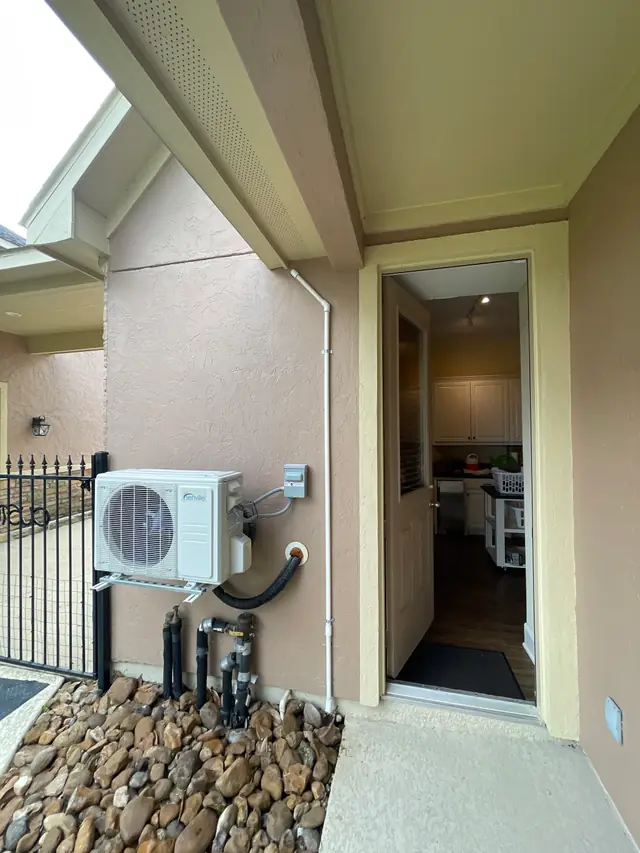
'Maintenance' is a vague word, and it gets used to describe everything from a genuine full inspection to someone glancing at the outdoor unit for five minutes. Homeowners who've never had a proper visit done often don't know what should actually happen, which makes it hard to tell whether the one they paid for was worth it. Here's what it actually involves.
The refrigerant charge gets checked, not assumed
A system running low on refrigerant doesn't announce itself with a warning light. It just gradually cools less efficiently, runs longer to hit the same temperature, and puts more strain on the compressor in the process. A maintenance visit checks the charge against the manufacturer's specification for that exact system, not a generic number, because the right charge varies by equipment and by the length of the line set running to the outdoor unit.
Electrical components get tested under load
Capacitors, contactors, and connections all take real wear from the compressor and fan motor starting and stopping thousands of times over a cooling season. A capacitor testing near the low end of its rating will work today and fail on the first ninety-five degree afternoon of the year, which is exactly the worst time for it to happen and the easiest time to avoid it. Testing these before the season starts catches the ones that are close to failing while there's still time to fix it on a normal schedule instead of an emergency one.
Coils get cleaned, and it matters more than it sounds
Both the outdoor condenser coil and the indoor evaporator coil rely on unrestricted airflow to move heat efficiently. A coil coated in dust, pollen, or grass clippings from the yard acts like a blanket over a radiator. It doesn't stop the system from running, it just makes the system work considerably harder to do the same job, which shows up as higher electric bills and shortened compressor life long before it shows up as an obvious breakdown.
The condensate drain gets cleared before it becomes a problem
Humidity is a fact of life on the Texas Gulf coast, and every AC system pulls a real amount of water out of the air while it cools. That water has to drain somewhere, and algae growth inside the drain line is a slow, quiet process that eventually clogs it completely. A clogged drain either backs up and causes water damage near the air handler, or trips a safety switch and shuts the whole system down. Clearing the line during a routine visit is a five-minute job. Dealing with the water damage afterward is not.
Blower components and airflow get checked, not just the outdoor unit
It's easy to think of maintenance as something that happens at the outdoor condenser, since that's the part most homeowners can walk out and look at themselves. The indoor side matters just as much. Blower wheel speed, belt condition on older systems, and airflow at the return get checked too, because a blower that's slowed down from years of dust buildup reduces total system performance the same way a dirty coil does, just from the other direction. A visit that only touches the outdoor unit isn't a full visit.
Why spring specifically, and not whenever it's convenient
A system that's about to fail usually shows small signs before it fails completely: slightly weak cooling, a capacitor testing a little low, a coil that's dirtier than it should be. Catching those signs in March or April means a scheduled repair on a normal day. Catching them for the first time in July means an emergency call during the week everyone else is calling too, on the hottest days of the year, when a fix that would've taken an afternoon in spring now means days without cooling while parts and appointments get sorted out. Demand for HVAC service climbs sharply the moment the first real heat wave hits Montgomery County, and appointment availability tightens right along with it. Catching problems early is half the reason to book a spring visit. The other half is getting a slot on the calendar before everyone else has the same idea.
- Refrigerant charge checked against the system's actual specification
- Capacitors, contactors, and electrical connections tested under load
- Both coils inspected and cleaned if needed
- Condensate drain line cleared
- Blower components and airflow checked
- Thermostat operation and calibration confirmed
The Preventative Maintenance Agreement program through LaFitte HVAC is built around exactly this list, done on a schedule instead of waiting for a breakdown to force the issue. LaFitte HVAC has served Conroe and Montgomery County since 2007 under Texas licence TACLA27440C. Call (936) 672-7696 to get on the schedule before the real heat arrives.
LaFitte HVAC LLC, (936) 672-7696
Call (936) 672-7696More articles
Your AC Is Running But the House Won't Cool Down: Here's Why
A running condenser and a warm house point to one of a short list of specific parts, not a dying system.
Repair or Replace? A Way to Think It Through That Doesn't Depend on Trust
There's no single rule for when a system is done, but there is a way to reason through it that keeps the decision in your hands.