Repair or Replace? A Way to Think It Through That Doesn't Depend on Trust
There's no single rule for when a system is done, but there is a way to reason through it that keeps the decision in your hands.
August 25, 2026 · 3 min read
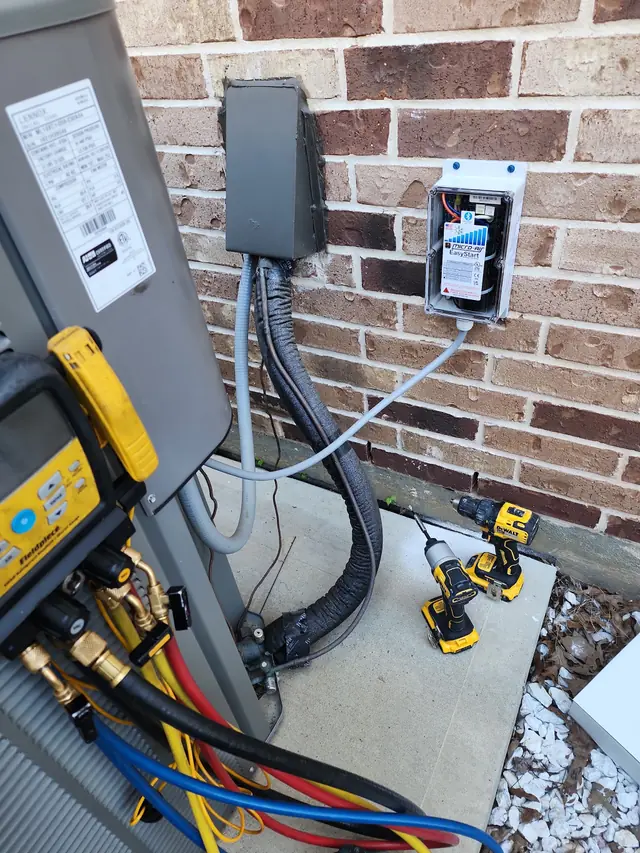
Every homeowner with an AC system past ten years old eventually hears some version of the same pitch: it's old, parts are getting harder to find, you'd be throwing good money after bad. Sometimes that's true. Sometimes it's a repair that would've solved the problem for a fraction of the cost of a new system, and the homeowner never found out because nobody laid out the actual reasoning.
Age alone isn't the question
A well-maintained system can run well past fifteen years. A poorly maintained one can start failing at eight. Age matters because it correlates with wear, and because manufacturers eventually stop producing parts for older equipment, but it's a proxy, not the actual answer. The real question is what's actually failing right now, how expensive that specific fix is relative to the system's remaining life, and whether this is an isolated failure or the first of a pattern.
Comfort and noise are part of the decision too, not just breakdowns
Not every reason to replace shows up as a failure. A system that's been running fine for years can still be struggling in ways that don't trip a breaker or freeze a coil. Rooms that never quite reach the setpoint, a system that runs almost constantly on mild days instead of cycling normally, a compressor that's noticeably louder than it used to be. None of that means the system is broken. It can mean the equipment is working harder than it should to deliver the same comfort it used to, which is worth factoring in even when nothing has technically failed yet.
Look at the pattern of calls, not just this one
A single capacitor failure on an otherwise healthy twelve-year-old system is a normal repair, not a signal to replace anything. A system that's had three different unrelated failures in eighteen months is telling you something different, even if none of those three repairs individually cost much. The compressor is the expensive part to replace and the one that usually decides the question on its own. A failing compressor on an older system is often the point where the math genuinely tips toward replacement, because you'd be putting a large repair bill into a system that's already shown you its age in other ways.
A technician's job is to lay out the choice, not make it for you
Two of our recent Google reviews mention the same thing from two different customers: a technician diagnosed the actual problem, fixed it, and didn't try to sell a full system replacement when a repair was all that was needed. That's not a sales pitch, it's how the diagnosis should work every time. You should walk away from a service call understanding what specifically failed, what it costs to fix that specific thing, and what the honest range is for full replacement, so you can weigh it yourself instead of taking someone's word that it's time.
When replacement genuinely is the right call
There are real signals worth taking seriously. A compressor failure on a system already past its expected service life. A refrigerant type that's been discontinued, which makes future leak repairs increasingly expensive as the remaining supply gets scarcer. A system that's undersized or oversized for the space, so it's been working harder than it should from day one regardless of maintenance. And simply a system that keeps failing in different ways every cooling season, which is its own kind of answer even without one dramatic breakdown.
A maintenance agreement changes the whole calculation
Most of what pushes a system toward premature replacement is neglect, not age. Dirty coils that make the compressor work harder than it needs to. Low refrigerant from a slow leak that never got caught early. A blower motor running dirty and stressed for years before it finally fails. That's exactly what the Preventative Maintenance Agreement program exists to catch before it becomes a repair-or-replace decision at all. Regular checkups don't just prevent breakdowns, they extend the point at which replacement genuinely becomes the better math.
LaFitte HVAC has been serving Conroe and Montgomery County since 2007, and licensed technicians under TACLA27440C will tell you honestly which side of that line your system is on. Synchrony financing is available if replacement is genuinely the right call. Call (936) 672-7696 and get the actual diagnosis before anyone hands you a number.
LaFitte HVAC LLC, (936) 672-7696
Call (936) 672-7696More articles
Your AC Is Running But the House Won't Cool Down: Here's Why
A running condenser and a warm house point to one of a short list of specific parts, not a dying system.
What a Maintenance Visit Actually Checks, and Why Spring Is the Time
A maintenance visit isn't a formality. Here's what a technician is actually looking at, and why the timing matters as much as the visit itself.